As food-service operators plan for 2026, induction cooking deserves a practical, evidence-led review. The key question is: what are the benefits of induction cooking in food service? According to the U.S. Department of Energy, induction can transfer roughly 80% to 90% of energy into cookware. Conventional gas cooking often transfers closer to 35% to 40%. This difference can reduce wasted heat around a busy range. ENERGY STAR also identifies induction as a high-efficiency option for commercial kitchens.
The benefits become visible during service. A sauté pan heats quickly, responds immediately, and stops producing heat when removed. That can improve temperature control for sauces, eggs, and delicate seafood. Less ambient heat may also reduce pressure on kitchen ventilation and cooling systems. The U.S. Energy Information Administration continues to report strong energy-cost volatility, making efficiency relevant to restaurant budgeting. However, induction is not a universal solution. Equipment prices, electrical capacity, cookware compatibility, and installation requirements can affect payback. This needs careful site assessment.
There is a human benefit, too. A cooler line can improve comfort during a long dinner rush. Cleaning may become easier because the smooth surface holds fewer grease traps. Still, performance depends on staff training and maintenance. Poor pan placement wastes time. Weak electrical infrastructure creates disruption. The best 2026 strategy combines manufacturer specifications, utility data, and measured kitchen trials. Small pilot tests may reveal more than optimistic sales claims.
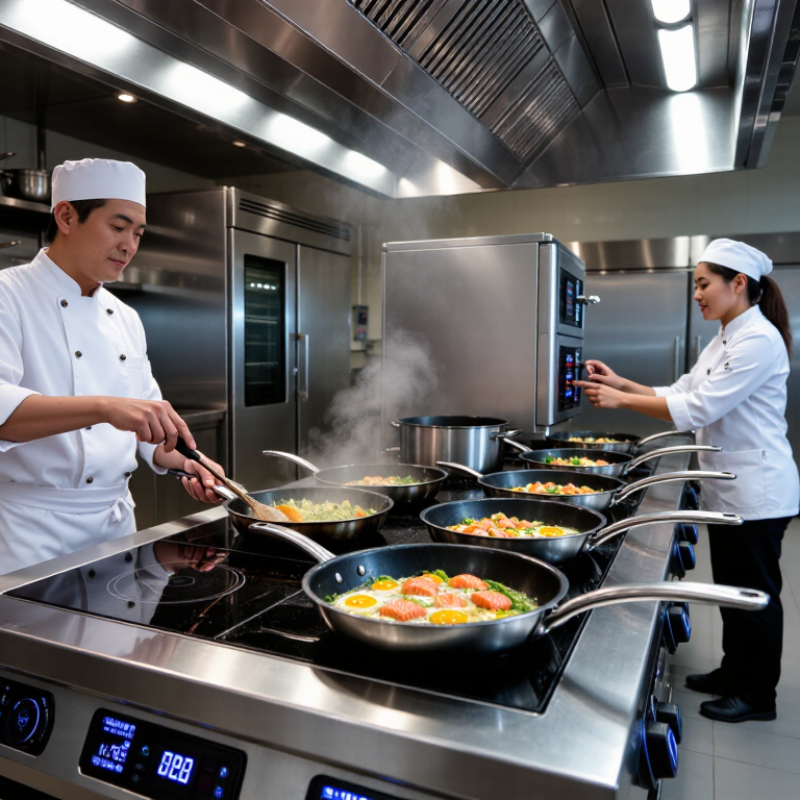
In a busy food-service kitchen, induction cooking turns electricity into heat inside the pan itself. Beneath the glass surface, a copper coil creates a rapidly changing magnetic field. When compatible iron-based cookware sits above it, the field produces tiny electrical currents in the pan. Resistance converts those currents into heat. The cook feels heat almost immediately. The surface stays comparatively cooler because it is not the primary heat source. Remove the pan, and heating stops or reduces sharply. This improves control during delicate sauces, rapid boiling, and timed service. It also keeps flames away from crowded work areas.
From practical kitchen experience, the benefit is clearest during repeated tasks. A line cook can move from simmering soup to searing vegetables with fewer recovery delays. Heat is concentrated beneath the cookware, so less energy escapes into the room. That may make a small kitchen more comfortable, although ventilation remains necessary. Smooth surfaces can simplify wiping between orders, but spills still require prompt attention. Not every pan responds well, and warped cookware can heat unevenly. Staff need training to match pan size, power level, and recipe timing. High settings are not always faster. They can scorch oil or stress thin pans. I have seen teams trust the display too much. Actual food temperature still deserves checking. Induction is precise, but precision depends on cookware, technique, and maintenance.
In 2026, food-service kitchens will judge induction by service performance, not novelty. The key measure is recovery speed after cold food reaches a busy pan. In practical trials, a responsive unit should restore heat quickly without scorching sauces. Even heating matters too. A cook should see fewer pale centers and burnt edges when searing several portions. Precise low-temperature control protects custards, chocolate, and reductions during long holding periods. These gains can reduce remakes, but only when cookware fits the heating zone.
Energy efficiency matters, yet wattage alone tells an incomplete story. Managers should compare energy used per finished meal, including idle time and heat lost around the pan. A cooler kitchen improves working conditions, especially beside a six-hour sauté station. Surface temperatures also fall faster after power is removed, which may lower accidental contact risks. However, ventilation savings depend on menu, room design, and local codes. They should be measured, not assumed.
Control quality becomes more important as teams face variable experience levels. Clear power steps, fast response, and repeatable settings help different cooks produce similar results. Timers and automatic pan detection can support consistency, but they cannot correct poor technique. Maintenance deserves equal attention. Grease, warped cookware, and sensor faults can quietly reduce output. I would test a unit during a real rush, not only in a showroom. That test may reveal an uncomfortable truth: the fastest setting is not always the most productive. A stable simmer and quick recovery may create more sellable plates than peak power.
Induction cooking can make a food-service kitchen safer, but it is not a safety guarantee. It transfers energy directly into compatible cookware, leaving less radiant heat around the station. During busy service, that difference matters. Staff may experience less heat on their hands, sleeves, and faces. Lower ambient temperatures can reduce fatigue, especially near a hot line. However, the glass surface can remain hot after a pan is removed. Clear indicators and a simple verbal check still matter.
From practical kitchen observations, cleaner heat control is another advantage. Temperature changes happen quickly, helping cooks prevent scorching and reduce unnecessary splashing. There is no open flame. That removes one ignition source and may make the cooking area feel calmer. Induction does not remove steam, smoke, or grease, so effective ventilation remains essential. Teams must also check cookware compatibility before service. A pan that fails during a rush creates stress, delays, and unsafe workarounds.
A responsible installation begins with an electrical load assessment and suitable counter space. Controls should be visible, reachable, and easy to clean. Training should cover hot-surface warnings, damaged cables, spills, and emergency shutdowns. I would not treat induction as automatically safer for every kitchen. Power interruptions can stop production, and unfamiliar controls may cause mistakes at first. Regular inspections and hands-on practice help reveal those weaknesses before they affect a crowded service period.
Induction cooking is becoming a practical tool for food service operations in 2026. Its best fit depends on the station, menu, and service rhythm. In a busy café, induction burners can support sauce preparation, soup holding, and made-to-order cooking. They also suit mobile counters and compact preparation areas. The equipment heats cookware directly, leaving less ambient heat around staff during long shifts. That can improve comfort in warm kitchens.
From a kitchen manager’s perspective, induction works especially well where temperature control matters. A pastry station may need gentle, stable heat for chocolate or custards. A catering team may value quick setup and easier surface cleaning. Induction surfaces usually have fewer open flames and can reduce grease buildup near cooking zones. However, cookware compatibility must be checked before installation. Poorly matched pans can slow service.
Not every station benefits equally. High-volume wok cooking may require different equipment and stronger heat patterns. My early assumption was that induction could replace every range. That was too simple. Power capacity, ventilation design, staff training, and repair access still matter. A realistic assessment should compare recovery time, energy use, cleaning labor, and peak-hour performance. Small trials can reveal problems that a sales specification misses. Watch the queue. That tells the truth.
Induction equipment transfers heat directly to compatible cookware, which can improve energy utilization compared with conventional cooking methods. This makes induction suitable for food service operations that prioritize precise temperature control, faster response, and reduced heat released into the kitchen.
Data shown are representative midpoint values from commonly reported appliance efficiency ranges: induction 80–90%, electric resistance 70–80%, and gas 35–40%.
In a busy food-service kitchen, induction equipment can improve speed, temperature control, and working comfort. However, selecting the right unit requires more than comparing wattage. A six-kilowatt cooker may perform well during testing but struggle when several stations share limited electrical capacity.
Start by measuring the available power supply, counter space, ventilation, and expected cooking volume. Check whether the equipment matches local electrical requirements and food-service safety standards. Heat changes quickly. This helps cooks reduce scorching, especially when preparing sauces, chocolate, or delicate egg dishes. The cooler cooking surface can also make cleaning easier, although spills may still bake onto hot cookware.
Pan compatibility deserves careful attention. Induction requires magnetic cookware, and some older pans may heat unevenly or fail completely. Test representative pots before purchasing. Measure twice. Also examine controls, timer accuracy, service access, and replacement-part availability. In a crowded kitchen, large touch panels may collect grease and become difficult to operate with wet gloves. Physical controls can be less elegant but more practical.
Noise is another overlooked factor. Cooling fans may become distracting during long service periods. Ask for operating sound information or inspect a working unit before installation. Portable equipment offers flexibility for demonstrations and temporary stations, while built-in systems may provide a cleaner workflow. The better choice depends on the menu, staff habits, electrical infrastructure, and cleaning routine. Initial assumptions are often wrong. A short trial during peak service can reveal problems that a showroom demonstration hides.
A copper coil creates a changing magnetic field beneath the glass. Compatible iron-based cookware converts electrical currents into heat. Almost immediate.
Heat stays concentrated beneath the pan, so less warmth escapes into the kitchen. Staff may feel less heat on their faces and sleeves.
No. The glass surface can remain hot after removing the pan. Use surface indicators and verbal checks during crowded service.
Magnetic cookware usually works best. Test representative pots before purchase. Warped pans may heat unevenly or fail completely.
Rapid temperature changes can reduce scorching in sauces, chocolate, and egg dishes. High power can still burn oil quickly. Technique matters.
Yes. Induction removes open flames, but it does not remove steam, smoke, or grease. Keep ventilation effective and clean.
Measure electrical capacity, counter space, cooking volume, and ventilation. Confirm local electrical requirements and relevant safety standards.
Sometimes. Grease and wet gloves can make large touch panels difficult to use. Physical controls may be less elegant, but often feel more reliable.
They can produce distracting noise during long shifts. Inspect a working unit before installation. A quiet showroom test may mislead you.
Staff should practice pan matching, power settings, timers, spill response, and emergency shutdowns. The display is not the whole truth. Check the food.
Induction cooking is becoming an increasingly valuable solution for food service operations in 2026. By using electromagnetic energy to heat compatible cookware directly, it delivers fast, precise, and consistent cooking performance while reducing wasted heat. The key question—what are the benefits of induction cooking in food service—can be answered through its improved temperature control, faster response times, energy efficiency, and reliable results during busy service periods.
Induction equipment can also support a safer and more comfortable kitchen by keeping surrounding surfaces cooler, reducing open-flame risks, and improving indoor working conditions. It fits a wide range of operations, including restaurants, catering services, hotels, institutional kitchens, and food preparation stations. When selecting equipment, operators should consider power requirements, cookware compatibility, cooking capacity, cleaning needs, durability, controls, ventilation conditions, and ease of maintenance. These factors help ensure the equipment matches both daily workflow and long-term operational goals.

Coden Kitchen