How to Maintain Commercial Cooking Equipment?

Time:2026-09-30 Author:Mason
0%

Commercial kitchens depend on reliable cooking equipment during every service. A failing fryer, oven, or griddle can delay orders, waste ingredients, and create avoidable safety concerns. Learning how to maintain commercial cooking equipment helps operators protect food quality, control operating costs, and extend the useful life of essential appliances.

Effective maintenance begins with small, repeatable actions. Staff should wipe grease from surfaces after cooling, empty fryer crumbs, and inspect burners before heavy use. Filters need regular cleaning, while refrigerator seals should remain flexible and intact. A simple example is a loose oven door gasket. It can release heat continuously and produce uneven baking. These details are easy to overlook.

Professional servicing remains necessary. Qualified technicians can test gas connections, electrical components, thermostats, ventilation systems, and safety controls. Manufacturer instructions should guide cleaning products, inspection intervals, and replacement parts. Local safety requirements also matter. Records should include dates, findings, repairs, and the employee responsible. This documentation supports accountability and reveals recurring problems.

No maintenance plan is perfect. Staff may miss a closing checklist, or a component may fail without warning. That is why managers should review procedures, train employees, and adjust schedules after real incidents. Practical experience often exposes weaknesses that manuals do not mention. With consistent inspections and honest reporting, commercial kitchens can operate more safely, efficiently, and predictably. Small habits matter.
How to Maintain Commercial Cooking Equipment?

Identify the Main Types of Commercial Cooking Equipment

How to Maintain Commercial Cooking Equipment?

Identify the Main Types of Commercial Cooking Equipment

Commercial kitchens depend on several equipment groups. Ranges and induction cooktops provide direct heat for sautéing, boiling, and pan work. Ovens handle baking, roasting, and finishing. Convection models circulate hot air, while combi ovens add steam for better moisture control. Griddles and charbroilers create high-contact heat for breakfast items, proteins, and vegetables.

Fryers need special attention because oil residue quickly affects performance and safety. Steamers, kettles, and tilting pans support high-volume production with less manual stirring. Refrigerated prep tables are not cooking units, yet they protect ingredients between preparation stages. The U.S. Department of Energy reports that restaurants can use several times more energy per square foot than other commercial buildings. ENERGY STAR also identifies cooking, refrigeration, and ventilation as major energy loads. This makes equipment selection part of maintenance planning, not merely purchasing.

Tips: Match each unit to its daily workload. Check door seals, burner flames, thermostat accuracy, and grease filters during scheduled inspections. Clean spills before they harden around hinges or heating elements. Keep a simple log with temperatures, repairs, and unusual noises. A clean surface can still hide a failing sensor. That is an easy mistake. Staff should report small changes early, because uneven heating often appears before a complete breakdown. Review the log monthly and question repeated repairs; replacement may be more reliable than constant adjustment.

Sources: U.S. Department of Energy, Commercial Buildings Energy Consumption Survey; ENERGY STAR, Restaurant Guide.

Create a Routine for Daily Cleaning and Inspection

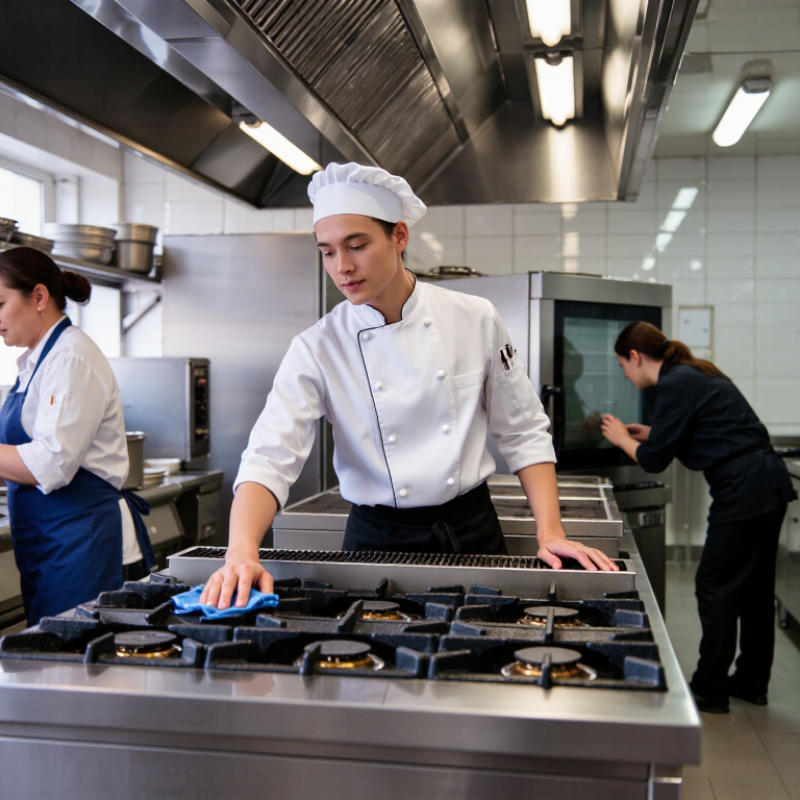
Commercial cooking equipment lasts longer when daily care becomes a fixed habit, not an occasional rescue. Create a written opening and closing routine for every shift. At closing, switch off approved controls and allow hot surfaces to cool safely. Remove food scraps from griddles, burners, fryer areas, ovens, and ventilation screens. Use the correct scraper, brush, and food-safe cleaner for each surface. Never spray liquid into switches, motors, or electrical connections. That mistake can be expensive.

During the inspection, look for loose knobs, cracked seals, unusual smells, and damaged cords. Check that doors close firmly and temperature displays respond normally. Inspect grease containers before they overflow, and keep surrounding floors dry. Record the date, employee initials, unusual findings, and corrective action. A simple log creates accountability and helps reveal repeated problems. I have found that rushed cleaning often misses the underside of handles. It is a small detail. Yet hidden grease can attract pests and harden overnight.

Train staff with a short demonstration, then watch the routine in practice. Pictures near the cleaning station can clarify tools and contact time. Do not guess when equipment behaves strangely. Stop using it if a safety feature fails, and report the issue to a qualified technician. Review the routine each month. Some steps may look unnecessary until a missed inspection causes uneven cooking or downtime. That is where the process needs honest revision.

Perform Safe Preventive Maintenance and Part Replacement

How to Maintain Commercial Cooking Equipment?

Perform Safe Preventive Maintenance and Part Replacement

Safe maintenance begins before anyone touches the equipment. Turn off power, gas, or fuel supplies, then allow hot surfaces to cool completely. Use protective gloves and follow the equipment’s service instructions. A trained technician should handle electrical testing, gas connections, and complex repairs.

Inspect cooking chambers, hinges, seals, burners, thermostats, and drain lines during scheduled checks. Look for cracked insulation, loose fasteners, unusual odors, or uneven heating. Grease buildup can hide small defects. Clean it carefully with approved methods, not excessive water near electrical components. Record each inspection, including the date, fault, action, and technician’s name.

Replace damaged parts before they create unsafe operating conditions. Use approved replacement parts with matching specifications, and never force a poor fit. Check connectors and fasteners after installation. Test the equipment at a safe temperature before returning it to service. A simple test can reveal a missed problem.

A checklist helps, but it is not perfect. Staff may overlook a worn seal during a busy shift. Reviewing maintenance records monthly can expose repeated failures and weak routines. That reflection often improves the next inspection.

How to Maintain Commercial Cooking Equipment? - Perform Safe Preventive Maintenance and Part Replacement

Equipment Area Preventive Maintenance Task Recommended Frequency Safety Requirement Replacement Indicators Maintenance Record
Cooking Surfaces and Grates Remove food residue, grease, and carbon deposits. Check for cracks, warping, and blocked openings. Daily cleaning; weekly inspection Switch off the equipment and allow hot surfaces to cool before cleaning. Cracks, severe warping, loose supports, or blocked burner openings. Record cleaning completion and visible damage.
Burners and Ignition System Inspect flame quality, ignition response, burner ports, electrode position, and burner caps. Weekly; after any ignition fault For gas equipment, shut off the gas supply before removing burner components. Stop use if gas odor is detected. Delayed ignition, uneven flame, damaged electrode, or repeated flame failure. Note flame condition, ignition performance, and corrective action.
Gas Hoses, Valves, and Connections Visually inspect hoses, connectors, shut-off valves, and accessible joints for wear or damage. Monthly; during annual service Do not use an open flame to test for leaks. Leak testing and repairs should be performed by qualified personnel. Cracking, kinks, corrosion, loose fittings, or failed leak test. Document inspection date, test result, and technician details.
Electrical Cords, Plugs, and Controls Check cords, plugs, switches, control knobs, displays, and visible wiring for damage or overheating. Weekly visual check; annual electrical inspection Disconnect power before opening panels or replacing electrical parts. Apply lockout/tagout where required. Frayed insulation, burn marks, loose terminals, erratic controls, or repeated circuit trips. Record electrical defects and whether the equipment was removed from service.
Ovens and Door Assemblies Clean the cavity, inspect hinges and latches, and check door seals for proper closure. Daily cleaning; monthly inspection Use heat-resistant gloves when necessary and avoid spraying liquid into electrical controls or heating elements. Torn gasket, loose hinge, damaged latch, heat leakage, or inconsistent cooking temperature. Record seal condition, door operation, and temperature observations.
Fryers and Filtration Systems Filter cooking oil according to operating conditions, clean the fryer vessel, and inspect drain components. Filter daily or as required; deep clean weekly Allow oil to cool to a safe handling temperature. Wear heat-resistant gloves, apron, and eye protection. Damaged filter media, leaking drain valve, unstable temperature, or excessive oil degradation. Record oil condition, filtration activity, and replaced components.
Exhaust Hoods and Filters Clean grease filters, inspect hood surfaces, and verify that airflow is not obstructed. Filter cleaning weekly; professional cleaning as required Turn off nearby cooking equipment where appropriate and follow fire-safety procedures during grease removal. Permanent grease buildup, damaged filters, restricted airflow, or excessive vibration. Record cleaning date, filter condition, and airflow concerns.
Temperature Sensors and Thermostats Compare displayed temperature with an approved reference thermometer and inspect sensor placement. Monthly; after abnormal readings Use calibrated test equipment and avoid contact with energized components. Persistent temperature deviation, damaged probe, unstable readings, or failed calibration check. Record actual reading, displayed reading, tolerance, and adjustment or replacement.
Water Lines, Drains, and Seals Inspect water connections, drain lines, gaskets, and accessible areas for leaks or scale buildup. Monthly; during descaling service Shut off water and power before disconnecting components. Clean spills immediately to prevent slips. Persistent leakage, brittle gasket, blocked drain, or heavy mineral deposits. Record leak location, descaling date, and replaced seals or hoses.
Safety Devices and Emergency Controls Test accessible emergency shut-offs, interlocks, limit controls, and warning indicators according to the service procedure. Monthly; during scheduled service Only trained and authorized personnel should test or reset safety controls. Failure to shut down, missing warning signal, bypassed interlock, or repeated safety fault. Record test result, fault condition, corrective action, and approval to return to service.

Important: Disconnect electrical power and isolate gas or water supplies before servicing. Parts involving gas, electrical systems, pressure, or safety controls should be inspected or replaced by qualified personnel in accordance with local regulations and the equipment service instructions.

Manage Heat, Power, Water, and Ventilation Systems

How to Maintain Commercial Cooking Equipment?

Commercial kitchen maintenance starts with four connected systems: heat, power, water, and ventilation. The U.S. Department of Energy reports that restaurants may use five to seven times more energy per square foot than other commercial buildings. That makes small losses expensive.

Check burner flames each morning. A yellow flame, delayed ignition, or uneven heat can signal blocked ports or poor combustion. Clean heating surfaces after cooling. Grease acts like a blanket and forces equipment to work harder. Keep electrical panels dry, inspect cords, and record unusual cycling or tripped breakers. Do not ignore them.

Water systems need equal attention. Inspect spray valves, hoses, drain lines, and seals for slow leaks. A damp cabinet floor is an early warning, not a cleaning problem. Use the correct water temperature and pressure, because excessive pressure damages valves and wastes water.

The U.S. Environmental Protection Agency identifies water efficiency as a major operating issue in commercial kitchens, especially where rinsing and warewashing run continuously.

Ventilation deserves practical testing. Clean hood filters and duct access points on a scheduled basis. Measure airflow when possible. ASHRAE guidance links effective kitchen ventilation with contaminant control and worker comfort. A hood that sounds powerful may still capture poorly.

I have seen teams clean visible surfaces but neglect fan belts and make-up air. That shortcut fails.

Maintenance logs should include readings, dates, symptoms, and corrective work. Review them weekly. Some schedules need adjustment; real cooking volume rarely stays constant.

Record Maintenance Tasks and Schedule Professional Servicing

Commercial cooking equipment works hard through heat, grease, moisture, and constant use. Record every maintenance task in a simple log. Include the date, equipment location, observed condition, completed work, and replacement parts. After each shift, staff can check filters, temperature displays, door seals, burners, and unusual sounds. These small details often reveal problems early. A recurring temperature drop may indicate a failing sensor or restricted airflow. I have found that short, accurate notes are more useful than vague comments like “checked.”

Tips: Use one record for each appliance. Write exact symptoms. Add photos when useful. Note who completed the task. Never hide a missed inspection; mark it clearly and reschedule it. That record builds trust.

Schedule professional servicing according to equipment use, operating conditions, and the service guidance provided with the appliance. High-use fryers, ovens, and refrigeration units may need more frequent attention than lightly used equipment. A qualified commercial-equipment technician should inspect electrical connections, gas components, calibration, ventilation, and internal wear. Daily cleaning does not replace this work. Set calendar reminders before busy seasons, not after a breakdown. Keep service reports with the maintenance log. I once postponed a minor repair because the equipment still operated. That decision created a longer interruption later. Regular review meetings can also show whether staff need clearer cleaning instructions or better training.

FAQS

What are the main types of commercial cooking equipment?

Ranges, induction cooktops, ovens, griddles, charbroilers, fryers, steamers, kettles, and tilting pans serve different cooking tasks.

How should equipment match daily kitchen work?

Choose units according to cooking volume, menu needs, and available space. A busy kitchen may need faster recovery times.

What should staff inspect every day?

Check door seals, burner flames, knobs, cords, temperature displays, grease filters, and unusual smells before service begins.

How should staff clean equipment at closing?

Switch off approved controls and let hot surfaces cool. Remove scraps, grease, and spills using suitable tools and food-safe cleaners.

Can liquid cleaners damage cooking equipment?

Yes. Never spray liquid into switches, motors, panels, or electrical connections. Wipe nearby areas carefully instead.

What signs suggest a heating problem?

Yellow flames, delayed ignition, uneven heating, strange cycling, and inaccurate temperatures may indicate a hidden fault.

How can a kitchen reduce energy and water waste?

Clean grease from heating surfaces, inspect leaks, use suitable water pressure, and keep ventilation filters clear.

Why should kitchens maintain an equipment log?

Record temperatures, dates, repairs, noises, and staff initials. Repeated repairs may show that replacement is more dependable.

What should happen when a safety feature fails?

Stop using the equipment and contact a qualified technician. Do not guess or keep operating it during a busy shift.

What cleaning details are often missed?

Staff may overlook handle undersides, fan belts, duct access points, and hidden grease near hinges. Small omissions can grow.

Conclusion

Learning how to maintain commercial cooking equipment begins with understanding the main types in your kitchen, including ovens, ranges, fryers, grills, steamers, and refrigeration-related cooking systems. Create a daily routine that includes removing food residue, cleaning surfaces, checking burners and heating elements, inspecting doors and seals, and confirming that controls work properly. Consistent cleaning and inspection can improve hygiene, efficiency, safety, and equipment lifespan.

Safe preventive maintenance should include replacing worn parts only when the equipment is switched off and handled according to proper safety procedures. Monitor heat, electrical power, water connections, drainage, and ventilation to prevent performance problems and unnecessary energy use. Keep clear records of cleaning, inspections, repairs, and part replacements, then use these records to plan regular professional servicing. A structured maintenance program helps identify minor issues early, reduce unexpected downtime, and keep commercial cooking operations reliable.

Mason

Mason

Mason is a seasoned marketing professional with a deep expertise in the company's offerings and a passion for driving brand awareness. With a strong background in digital marketing strategies, he has an innate ability to connect with diverse audiences and effectively communicate product benefits.......