Choosing a cooking method in a commercial kitchen involves more than speed or flavor. It affects food safety, consistency, energy use, and staff workload. The real question is, “what is the safest cooking method for commercial kitchens?” The answer depends on the food, equipment, volume, and control systems in place.
Moist-heat methods, such as steaming and boiling, can provide reliable temperature control for many foods. Pressure cooking may shorten cooking time, but it demands trained operators and well-maintained equipment. Baking, roasting, and grilling can also be safe when staff verify internal temperatures with calibrated thermometers. A golden surface is not proof of safety.
Not always.
Safe cooking begins with measured controls. Staff should check the thickest part of the food, record critical temperatures, and prevent raw ingredients from contacting cooked items. A clean probe, a dry storage label, and a clear cooling procedure can matter as much as the cooking method itself. Food safety guidance from recognized public health authorities supports this control-based approach.
In practice, busy kitchens sometimes rely too heavily on timers. That is a weakness. Cooking times change with batch size, pan depth, starting temperature, and equipment performance. A method that worked yesterday may fail during a crowded service. This guide compares common commercial cooking methods and examines their risks, strengths, and practical safeguards. It also considers an uncomfortable point: the safest method is often the one staff can monitor consistently, not the one that appears most advanced.
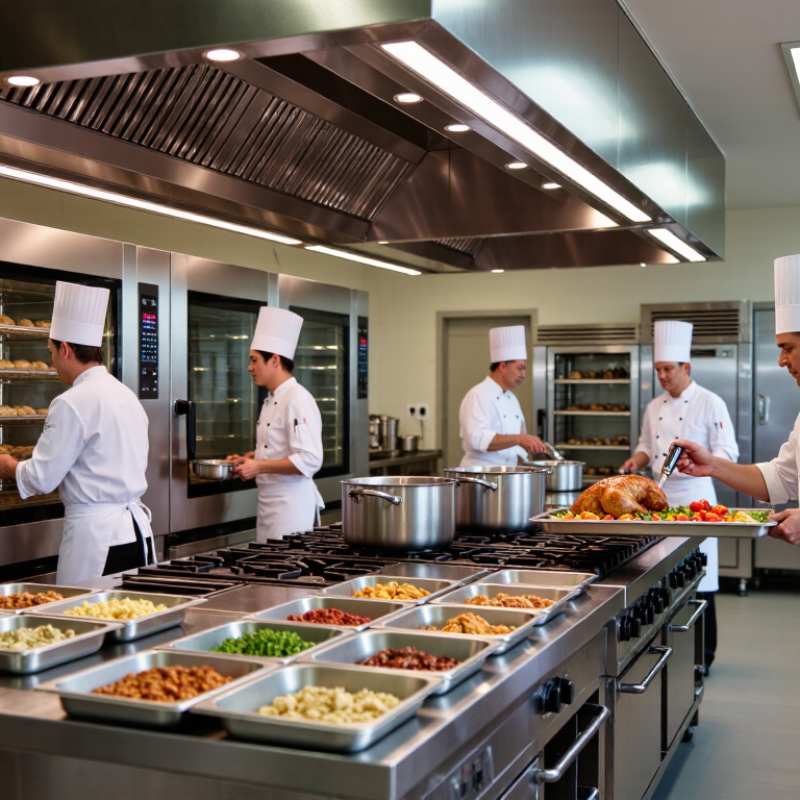
The safest cooking method in a commercial kitchen is not always the same. Safety depends on food type, equipment condition, staff training, and temperature control. Steaming and boiling often provide even heat, especially for soups, vegetables, and poultry portions. However, thick foods can remain underheated in the center. A bubbling surface proves little.
Dry-heat methods create different risks. Roasting may leave cold spots when trays are crowded. Grilling can char the outside while the inside stays unsafe. Deep-frying demands careful oil management, stable equipment, and dry ingredients. Hot oil can react quickly to water. I have found that small details matter: a clean probe thermometer, separated utensils, and a clear cooking log. These habits feel ordinary. They prevent serious mistakes.
Low-temperature cooking can improve consistency, but it requires strict control from preparation through chilling and storage. It is not automatically safer. Staff should verify the thickest portion, not the easiest surface. Food should move quickly through unsafe temperature ranges, with holding temperatures checked regularly. Equipment should be inspected before service, especially door seals, heating elements, and thermostat accuracy. Even experienced teams make assumptions. A crowded oven, rushed worker, or forgotten timer can defeat a sound method. Safety improves when cooking choices match the food, the equipment, and the people using it.
What Is the Safest Cooking Method for Commercial Kitchens?
Heat-based cooking methods create different risks. Open gas flames can ignite grease, towels, or packaging near the range. The National Fire Protection Association reported an average of 7,410 structure fires annually in eating and drinking establishments from 2017 to 2021. Cooking equipment was involved in 61% of those fires. Frying deserves special attention because overheated oil can spread flames rapidly across a pan or fryer.
Induction cooking removes the open flame and transfers about 84% of electrical energy into the cookware, according to the U.S. Department of Energy. Standard electric resistance equipment transfers roughly 74%, while gas transfers about 40%. Induction can reduce surrounding heat, accidental ignition, and cleaning problems. Yet it is not risk-free. Hot pans remain dangerous, and damaged cables or wet surfaces can create electrical hazards. A busy line can also leave empty cookware heating unnoticed.
Heat control must support food safety, not only fire prevention. The 2022 FDA Food Code requires many reheated foods to reach 165°F for 15 seconds. Hot-held foods generally need to remain at 135°F or above. Steam cooking and pressure cooking can provide steady temperatures, but poor calibration still causes failures. Small gaps matter. A probe thermometer, clean filters, and trained staff often prevent more incidents than equipment choice alone. I would not call induction universally safest; kitchen layout, maintenance, ventilation, and human habits can change the result.
The safest cooking method depends on the food, its size, and the available equipment. There is no universal winner. Steam is highly effective for poultry, seafood, and vegetables because it cooks gently and limits surface drying. However, crowded trays can create uneven heating. A probe thermometer remains essential.
For thick poultry pieces, roasting or combi cooking can provide steady heat and better control. Check the coldest center, not the browned surface. Poultry should reach the temperature required by local food safety rules, commonly 74°C. Ground meat needs special care because bacteria may be distributed throughout the product. Griddling can work well, but only when portions have similar thickness. Otherwise, thin edges may overcook while the center remains unsafe.
Induction cooking offers quick, adjustable heat for sauces, eggs, and shallow pans. It is less suitable for large stockpots unless the unit can support their weight and volume. Deep-frying is appropriate for foods that need a crisp coating, but oil temperature, filtering, and splash control demand close attention. Never rely only on a display; verify temperatures with calibrated equipment. I once considered speed the main safety advantage, but consistency matters more. Staff training, clean probes, separated utensils, and written checks often prevent more failures than a sophisticated machine. Even experienced cooks can miss a cold spot. That possibility deserves respect.
The safest cooking method in a commercial kitchen is not simply grilling, steaming, or baking. Safety depends on controlling temperature, time, and cross-contamination at every stage. A reliable food thermometer should measure the thickest part of the product, not the pan or surface. For example, poultry should reach 74°C (165°F), while ground meats commonly require 71°C (160°F). Local food regulations may set different limits, so kitchen procedures must match current requirements.
Time matters after cooking. Hot food should remain at 57°C (135°F) or above, while cold food should stay at 5°C (41°F) or below. Cooked food needs rapid cooling in shallow containers, with frequent checks during the process. Do not trust steam, color, or appearance alone. They can mislead you. Calibrated thermometers and written temperature logs provide stronger evidence.
Cross-contamination controls begin with separation. Raw poultry, seafood, and vegetables should use different boards, knives, containers, and storage areas whenever possible. Store raw ingredients below ready-to-eat food to prevent dripping. Wash hands before changing tasks, and sanitize food-contact surfaces after handling raw products. I have seen experienced cooks skip one step during a busy service. That small shortcut can undo careful preparation. Clear labels, clean gloves, and routine checks help, although staff still need practical training and honest reminders.
The safest cooking method in a commercial kitchen is the one staff can perform consistently and verify. Controlled heat, clean equipment, and accurate internal temperatures matter more than choosing one cooking style. Baking, steaming, grilling, and sautéing can all be safe when procedures are clear. A thermometer should confirm the center of each food item, not just its surface.
Training must reflect real kitchen pressure. Staff should practice checking temperatures, changing gloves, preventing cross-contact, and storing cooked food correctly. Short demonstrations work well beside the cooking station. Supervisors can watch a full service period and correct small mistakes immediately. A rushed shift may reveal weaknesses that classroom training misses. That is uncomfortable, but useful.
Tips: Use simple checklists. Calibrate thermometers regularly. Record cooking temperatures and cooling times. Review logs during shift meetings. Ask employees to explain why each step matters. Replace vague instructions with visible targets. If a worker skips a check, investigate the cause instead of blaming the person. The procedure may be unclear, or the equipment may slow production. Monitoring should identify both issues. Training also needs refreshing after menu changes, equipment repairs, or repeated recording errors. Even experienced cooks can develop shortcuts. Quiet observation helps reveal them.
No single method is always safest. Induction removes open flames, but hot pans and electrical faults remain dangerous. Kitchen layout, maintenance, ventilation, and staff habits matter greatly.
Flames can ignite grease, towels, paper packaging, or clothing near the range. A small flare-up may spread quickly. Keep combustible items away from burners.
No. It reduces nearby heat and accidental ignition. However, empty cookware can stay hot, and wet surfaces or damaged cables may create electrical hazards. I would not call it perfect.
Many reheated foods should reach 165°F for 15 seconds. Use a calibrated thermometer in the thickest section. Steam and appearance are unreliable clues.
Keep hot food at 135°F or above. Check temperatures regularly and record the results. A pan may look hot while its center is unsafe.
Place cooked food in shallow containers for faster cooling. Check it frequently with a thermometer. Large, deep containers can hold heat in the middle.
Separate raw poultry, seafood, vegetables, and ready-to-eat foods. Use different boards, knives, containers, and storage areas when possible. Store raw items below prepared food.
Wash hands between tasks and sanitize food-contact surfaces after handling raw ingredients. Clean filters and check cables regularly. Staff training helps, but busy workers may still skip steps.
Not always. A well-designed appliance cannot correct poor temperature checks or careless storage. Written logs, clear labels, and honest reminders often prevent small failures. We still need better habits.
Determining what is the safest cooking method for commercial kitchens depends on the food being prepared, the available equipment, and the level of control over heat, time, and hygiene. Methods such as steaming, baking, boiling, grilling, frying, and sous vide each present different risks, including uneven heating, hot oil injuries, fire hazards, and inadequate cooking. The safest choice is the method that reliably reaches the required internal temperature while minimizing handling and contamination risks.
Commercial kitchens should match cooking methods to specific foods and equipment, use calibrated thermometers, and follow clear time and temperature procedures. Separate raw and cooked ingredients, sanitize work surfaces, and prevent cross-contamination throughout preparation and service. Ongoing staff training, equipment inspections, temperature logs, and routine monitoring help maintain consistent safety standards. By combining suitable cooking techniques with strong hygiene controls and careful supervision, kitchens can reduce hazards and serve food safely.

Coden Kitchen