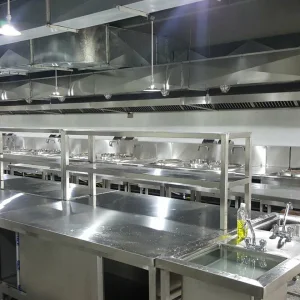
Premium processing machinery, facility infrastructure and high-performance kitchen systems utilized by leading establishments globally.
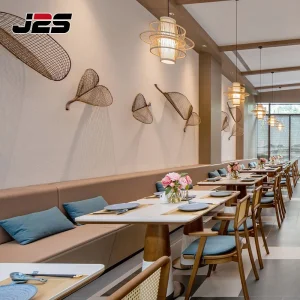
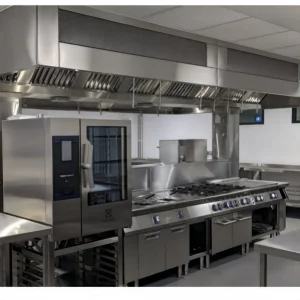
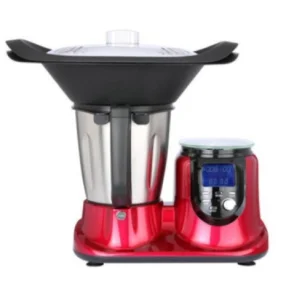
Analyzing industry shifts toward regulatory compliance, material performance, and ecological longevity across enterprise-level food processing pipelines.
Modern commercial carving boards are no longer simple kitchen tools; they are highly engineered control points in hazard prevention (HACCP) frameworks. Heavy-duty operations require food contact surfaces that resist microbial nesting, withstand aggressive chemical sanitation regimens, and prevent cross-contamination in high-throughput environments.
The global market is bifurcated between food-grade High-Density Polyethylene (HDPE) polymer boards and premium end-grain hardwoods (such as Canadian Maple or European Beech). While polymer boards dominate high-volume processing lines due to their color-coding adaptability and chemical sanitization profile, high-end butcher shops and carving stations favor dense wood composites for edge preservation.
Centralized culinary prep centers (dark kitchens, automated packaging plants) require carving boards and preparation tables calibrated to mechanical conveyor belts and custom table mounts. Large-scale manufacturers design these boards with micro-structured surfaces to reduce slippage and optimize automated slicer yields.
Understanding the engineering methodologies, surface treatments, and advanced polymers shaping tomorrow's food safety standards.
Next-generation polymer boards are transitioning from basic HDPE to Ultra-High-Molecular-Weight Polyethylene (UHMWPE) formulations. By optimizing density and cross-linking, manufacturers are producing carving boards with outstanding scratch resistance, preventing deep groove formation where anaerobic bacteria can thrive.
Modern extrusion lines are incorporating food-safe silver-ion additives directly into the polymer matrix during the liquid phase. This guarantees long-term antimicrobial properties that do not degrade or leach out even after hundreds of commercial high-temperature dishwasher cycles.
Driven by ESG targets, top global manufacturers are developing fully circular, food-certified recycled polymers. These boards are designed for end-of-life buyback programs, where worn carving boards are planed, re-melted, and re-extruded into non-food contact industrial components.
How vertical integration, raw material optimization, and smart production facilities deliver unparalleled global value.
Chinese polymer manufacturers work in close proximity to massive chemical processing clusters, securing high-quality food-grade polyethylene directly from primary synthesis lines. This keeps raw material costs stable, minimizing price fluctuations for overseas distributors.
Utilizing multi-axis industrial CNC routing machines, facilities can rapidly execute custom sizing, custom handles, juice grooves, and anti-slip feet placements. Automated design pipelines enable fast turnarounds from digital drawings to shipped containers.
Located near major port infrastructures like Ningbo, Shanghai, and Shenzhen, Chinese manufacturing hubs provide streamlined export logistics. This drastically cuts lead times and allows mixed-product shipping with other commercial kitchen apparatus.
Adapting heavy-duty prep surfaces to unique regulatory and culinary requirements across major international regions.
In the United States and Canada, meat processing lines require thick, certified HDPE boards that resist surface scouring from mechanical cleavers. These boards must fit into stainless steel counter frames and withstand rigorous daily high-pressure washdowns with chlorinated sanitizing solutions.
European markets demand high compliance with EU Regulation No. 10/2011. Fine-dining establishments rely on premium wood-composite boards for carving proteins table-side. These boards combine natural aesthetic qualities with a high surface density that prevents juice absorption.
From Japanese sushi prep lines to seafood exporting plants in Southeast Asia, carving boards are exposed to intense humidity and moisture. These environments rely on dedicated blue and yellow-coded anti-bacterial polymer sheets to prevent bacterial cross-contamination in raw fish processing.
Navigating global standards to guarantee safety, quality, and smooth importing logistics across all borders.
Our raw materials are fully compliant with FDA regulations for food contact surfaces and are certified under NSF standards. This ensures frictionless entry through customs and compliance with local health inspections.
We produce the complete range of HACCP-recommended colored boards (red for raw meat, blue for seafood, green for produce, yellow for poultry) to ensure absolute safety and clarity across your preparation areas.
We support green building initiatives (LEED certification) by offering wood-composite materials harvested from FSC-certified forests, along with low-emission adhesive bonding solutions.
Addressing the top operational, material science, and custom fabrication questions from global commercial buyers.
HDPE offers a high strength-to-density ratio and low moisture absorption. Unlike low-density plastics, it provides a stable carving surface that resists deep knife scoring without dulling sharp blades. This is crucial for maintaining both sanitary conditions and blade longevity in high-volume settings.
Warping is typically caused by uneven heating or residual internal stresses from the extrusion process. We employ an extended annealing cycle post-extrusion, allowing the polymer chains to relax. This ensures that the boards remain flat during high-temperature sanitizing cycles (up to 85°C / 185°F).
We offer extensive customization, including custom dimensions, custom juice reservoirs, non-slip rubber corner inserts, laser-etched branding or scale measurements, and custom routing configurations to fit integrated prep tables.
Wood composites offer higher structural rigidity and a premium look suitable for front-of-house operations. Polymer boards, however, are more cost-effective, lighter, and easier to sanitize in automated, high-volume operations.
Standard lead times range from 20 to 30 days after drawing approval, depending on the complexity of the routing work and raw material availability.
High-efficiency components, heating and preparation platforms engineered for professional and industrial operations.
 Coden Kitchen