Engineered for high performance, structural longevity, and maximum compliance across international distribution channels.
Understanding the structural, mechanical, and safety innovations driving the global demand for textured grip cutting solutions.
Textured grip cutting mats play a vital role in preventing cross-contamination within commercial and industrial kitchens. The microscopic peaks and valleys of a textured surface allow for dynamic drainage of liquids, limiting bacteria adherence and reducing physical slipping vectors that lead to cross-contact events.
By blending custom Polypropylene (PP) and Thermoplastic Elastomers (TPE), modern OEM manufacturers achieve a durometer profile that is knife-friendly yet structurally resilient. The material resists localized deep-groove scoring, preventing food particles and microbes from embedding inside the cutting matrix.
The global demand for high-friction safety prep equipment has grown at an estimated 6.8% CAGR. Key drivers include rigorous occupational safety regulations (such as OSHA in the US and EU-OSHA in Europe) requiring non-slip grip characteristics on working surfaces in commercial facilities.
Industrial processors, food service giants, and retail networks require custom extrusion matrices that guarantee safety. Our manufacturing pipelines are configured to support custom thicknesses (0.5mm to 3.0mm) and custom texturing patterns to serve these critical sectors.
Annual Market CAGR
100% Food-Grade Certification
Dynamic Friction Coefficient
Full Spec Customization
A deep dive into polymer compositions, surface friction constants, and physical longevity metrics required by professional distributors.
| Material Core Blend | Dynamic Friction Coefficient (CoF) | Shore Hardness (Durometer) | Chemical Resistance (Sanitizing Agents) | Thermal Deflection Limit |
|---|---|---|---|---|
| High-Density Polyethylene (HDPE) + TPE Backing | 0.52 - Wet / 0.65 - Dry | Shore D 60 - 65 | Excellent (Chlorine, Quats, Peracetic Acid) | 85°C (185°F) |
| Flexible Polypropylene (PP) Homopolymer | 0.48 - Wet / 0.58 - Dry | Shore R 80 - 90 | Outstanding (Strong acids and alkalis) | 110°C (230°F) - Dishwasher Safe |
| Thermoplastic Polyurethane (TPU) Coating | 0.68 - Wet / 0.80 - Dry | Shore A 85 - 95 | Good (Susceptible to concentrated chlorine) | 95°C (203°F) |
| Recycled Polymer Matrix (rPP) with Bio-derived Fillers | 0.45 - Wet / 0.55 - Dry | Shore D 55 - 60 | Moderate to High (Requires specialized sanitizers) | 80°C (176°F) |
Textured patterns are not merely aesthetic; they are designed through computational fluid dynamics (CFD) to channel oils, water, and food starches away from the blade edge. The *diamond-weave crosshatch*, *micro-dot matrix*, and *sand-blast matte* textures represent the three primary geometries manufactured in our facilities. Each serves specific cutting scenarios, optimizing the balance between knife edge preservation and sheet anchoring stability.
Analyzing future trends in surface engineering, intelligent tracking systems, and circular polymer economies.
Integration of non-leaching metal-ion arrays into the masterbatch. This delivers 99.9% active eradication of Gram-positive and Gram-negative bacteria directly within the micro-textured surface grooves without compromising food safety.
Transitioning OEM custom manufacturing pipelines to utilize 100% food-contact-approved recycled ocean plastics. Utilizing modern depolymerization processes to yield high-density matrices identical in performance to virgin polymers.
Smart cutting mats featuring localized pressure-sensitive microcapsules that shift color when the surface integrity is compromised. This signals food safety officers that a replacement is required to maintain hygiene standards.
Providing technical infrastructure, strict regulatory documentation, and logistical advantages for B2B procurement partners.
Our agile extrusion processes allow rapid production scaling from small prototype batches up to container-load orders. Utilizing advanced predictive logistics models, we minimize lead times to key hubs in Western Europe, East Asia, and the Americas.
Full supply chain traceability ensures every cutting mat meets FDA 21 CFR 177.1520 regulations, EU Directive 10/2011, LFGB standards, and REACH registrations. Free from plasticizers, heavy metals, and BPA.
We provide complete design-to-package OEM services. Options include high-definition embossed branding, customized geometric shapes, custom Pantone color-coding systems (critical for HACCP execution), and specialized packaging solutions.
Answers to critical technical, chemical, and commercial questions compiled by our senior polymer engineering team.
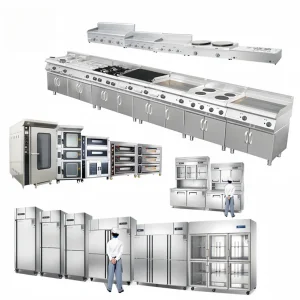
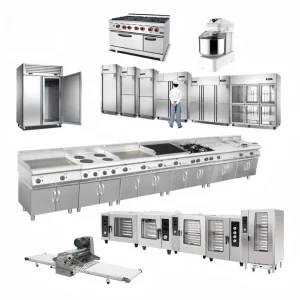
Discover our comprehensive range of commercial prep and processing technologies optimized for high-volume commercial throughput.
 Coden Kitchen