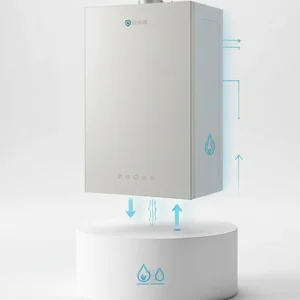
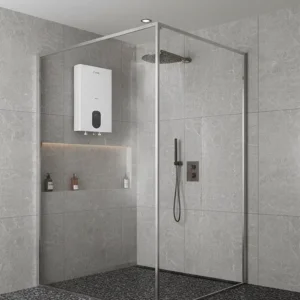
The following advanced commercial water heating and thermal distribution systems are fully adapted for Latvian commercial environments, designed to operate efficiently within local power grids and Baltic low-temperature environmental cycles.
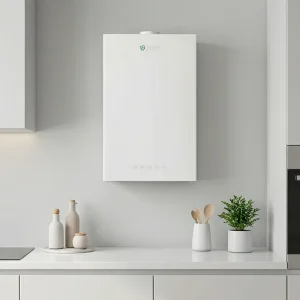
Latvia's commercial kitchen sector, spanning historical hospitality zones in Riga to industrial food processing centers in Liepāja and Daugavpils, is undergoing an unprecedented paradigm shift. Under the National Energy and Climate Plan of Latvia (NECP 2030), the country is committed to reducing dependency on fossil-based energies while aggressively escalating energy efficiency across commercial properties. Commercial and institutional kitchens are historically energy-intensive, requiring massive heat loads for sanitation, food preparation, and space heating. To maintain viability amid shifting regional tariffs and stringent EU regulations, operators must transition to modern high-power heating solutions.
Our position as a specialized manufacturer and global exporter allows us to deliver high-power thermal solutions specifically designed to resolve these regional bottlenecks. The Latvian HoReCa (Hotel, Restaurant, and Café) sector must integrate systems that satisfy not only instant load capacities but also comply with regional environmental guidelines. This dictates the deployment of ultra-low NOx burners, segmented heating matrices, and high-output electrical induction frameworks capable of running under optimal power factors.
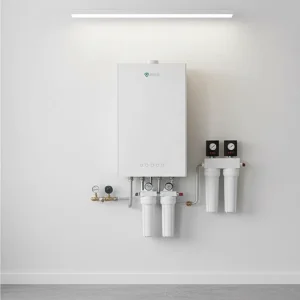
A crucial factor limiting the efficiency of standard commercial boilers in northern European climates like Latvia is the phenomenon of cyclic heat loss under partial loads. Standard atmospheric burners suffer from high purge losses and broad temperature fluctuations. Our segmented boiler designs solve this by isolating the heating load into discrete modules that act in concert with intelligent modulating controls. This means a commercial kitchen requiring only 20% of its heating capacity during off-peak prep hours will only cycle a fraction of the system, maintaining optimal thermal efficiency without activating the entire combustion chamber.
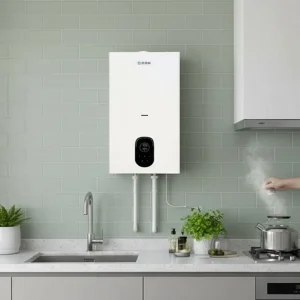
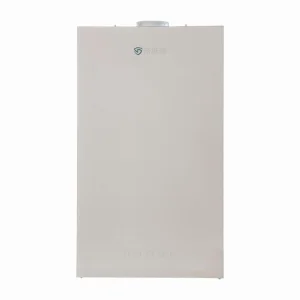
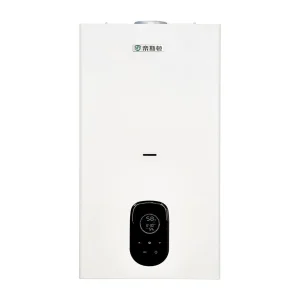
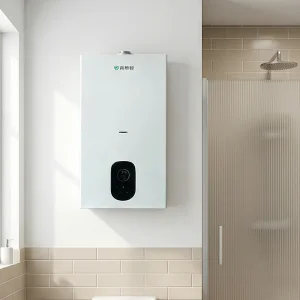
Additionally, our fully premixed gas water heaters optimize the air-gas ratio before combustion. By employing sophisticated micro-modulating gas valves and variable-speed blower fans, the combustion process occurs with minimal excess air. This leads to higher dew points in the flue gases, facilitating high condensation and capturing latent heat that traditional systems simply vent into the Baltic skies. The resulting thermal efficiency consistently exceeds 107% under lower temperature return loops, drastically reducing monthly gas consumption for commercial operators in Riga and surrounding municipalities.
Explore our heavy-duty cooking and space heating installations engineered for commercial food service lines, corporate dining halls, and production facilities requiring immediate, high-load thermal transfer.
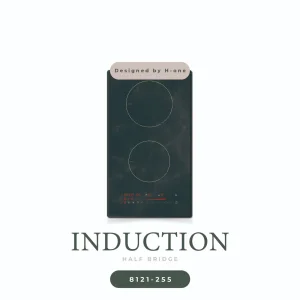
As Latvia moves rapidly toward grid desynchronization from the old Soviet-era BRELL loop to synchronize with continental Europe by 2025, the local electricity market (managed via the Nord Pool spot exchange) is encouraging structural shifts toward electrification. The deployment of high-power cooking systems such as our 3700W Half Bridge Induction Cookers has become a strategic priority for commercial operators. Traditional electric hotplates rely on resistive heat transfer, resulting in substantial ambient heat losses and slow responsiveness. In contrast, induction cooking leverages magnetic fields to induce eddy currents directly within the cookware vessel itself. This reduces energy consumption by up to 50% compared to open-flame systems and ensures a cooler, safer working environment.
The "Half Bridge" circuit design of our induction products provides a critical technological edge over standard domestic induction systems. By utilizing dual IGBT (Insulated Gate Bipolar Transistor) switching configurations, our cookers achieve sustained high-power outputs without thermal cycling interruptions. In commercial applications, this enables stable boiling, faster searing, and continuous operation under extreme peak demands. Furthermore, it operates with a highly stable power factor (PF > 0.98), minimizing reactive power issues that can lead to high power line surcharges from Latvia’s distribution network operator, Sadales Tīkls.
To assist procurement managers, facility engineers, and building service consultants in Latvia in selecting optimal systems, the following matrix compares traditional atmospheric gas systems, modern fully premixed gas setups, and electrical induction technologies:
| Performance Indicator | Atmospheric Gas Systems | Fully Premixed Condensing | Half-Bridge Induction (3700W) |
|---|---|---|---|
| Thermal Efficiency | 70% - 78% | 104% - 108% (condensing) | 90% - 95% (direct transfer) |
| NOx Emissions | > 120 mg/kWh | < 30 mg/kWh (Class 6 Compliant) | Zero direct emissions |
| Modulation Depth | Limited (Typically 1:3) | Ultra-wide (Up to 1:10) | Continuous Digital (10-100%) |
| Peak Load Responsiveness | Slow heat-up times | Instant dynamic modulation | Immediate magnetic heat generation |
| Typical Applications in Latvia | Legacy restaurant designs | District-integrated kitchen boilers | High-volume industrial cooking lines |
For any high-power kitchen equipment imported into Latvia and the wider European Union, strict compliance with safety, emissions, and energy efficiency directives is non-negotiable. Our manufacturing facility strictly adheres to ISO 9001:2015 quality management principles, ensuring every unit produced complies with all applicable European codes. All commercial gas equipment exported by us features full compliance with the Gas Appliances Regulation (GAR EU/2016/426) and bears the CE marking.
Furthermore, under the Ecodesign Directive (ErP Directive 2009/125/EC), our water heating and boiler lines achieve high Seasonal Space Heating Energy Efficiency ratings. By deploying these compliant systems, Latvian businesses can qualify for green building certifications, such as BREEAM and LEED, which are becoming standard for new developments and commercial properties across Riga.
From custom engineering and electrical frequency adaptation to secure Baltic Sea shipping logistics, we provide comprehensive B2B supply chains.
We provide tailormade engineering configurations for voltages (380-415V three-phase for industrial Latvian facilities), customized dimensions, and PLC integration with local building management systems (BMS).
Every unit undergoes heavy testing: high-pressure gas leakage verification, 5000V dielectric strength testing, and continuous thermal performance cycles before packing for Baltic shipment.
We coordinate secure sea, rail, or air logistics directly to primary Latvian transport terminals including Riga Port, Ventspils Port, or Riga International Airport (RIX), handling all export paperwork.
When procurement officers in Latvia evaluate heating solutions, they must assess factors beyond initial capital expenditure. Modern B2B sourcing strategies prioritize Total Cost of Ownership (TCO). High-power heating systems with low seasonal efficiency ratings lead to rising operating expenses, which can quickly exceed the initial purchase savings. In Latvia, where seasonal winter temperatures routinely fall below -10°C, commercial kitchens demand highly reliable and energy-efficient heating equipment to avoid excessive utility bills.
Furthermore, parts availability and structural durability are critical considerations. We configure our systems with globally recognized components (such as Ebmpapst fans, SIT gas valves, and Infineon IGBT modules for our induction series). This ensures that local maintenance teams in Latvia can quickly obtain replacement components if necessary. Our boilers also feature high-grade SUS304 or SUS316L stainless steel heat exchangers, which resist corrosion from chlorinated public water supplies and ensure a long operating life.
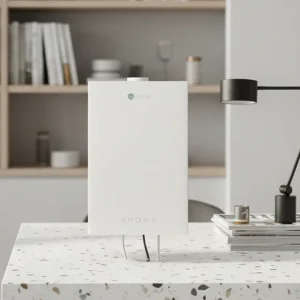
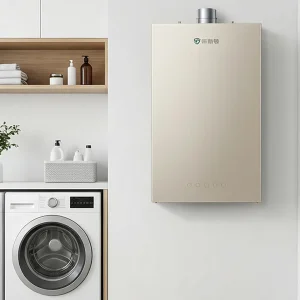
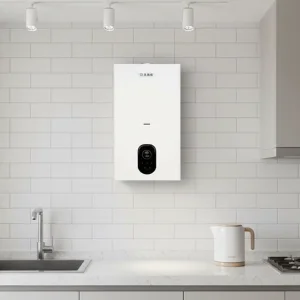
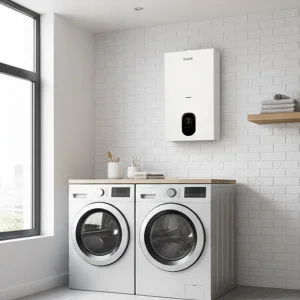
The following systems represent our full commercial heating and hot water delivery systems, optimized for energy-saving, durability, and high thermal output.
Expert clarifications regarding technical execution, local code compliance, logistics, and integration of high-power kitchen heating solutions in Latvia.
Yes. All of our electric heating units, including the 3700W Half Bridge induction models, operate on European standard voltages (220V-240V single-phase or 380V-415V three-phase at 50Hz) and carry CE certifications. Our commercial gas boilers conform to Latvia’s national standards (LVS) and the Gas Appliances Regulation (GAR EU/2016/426), ensuring compatibility with Latvia’s gas grid specifications (natural gas type H or LPG).
Generally, standard orders take 30 to 45 business days to manufacture and test. We manage ocean freight logistics directly to the Port of Riga, or intermodal rail lines across Eurasia for expedited land routes. For emergency replacements, express air cargo via Riga International Airport (RIX) can be arranged.
During cold Baltic winters, heating demand fluctuates significantly between peak operation hours and overnight standby cycles. Our segmented boiler designs feature independent combustion modules that adjust output based on actual demand. By preventing frequent system cycling, this design minimizes energy loss and reduces overall fuel consumption compared to traditional monobloc commercial boilers.
Our quality control protocol involves rigorous testing of each unit before packaging. This includes hydrostatic pressure tests up to 1.5 times the maximum rated working pressure, electrical insulation assessments, gas safety checks, and performance verification under extreme thermal loads. We source major components from leading global suppliers to guarantee longevity and reliable operation.
Yes, we specialize in OEM/ODM manufacturing. We can customize casing dimensions, structural chassis layouts, water connection placements, control panels, and PLC communication protocols (such as Modbus or BACnet) to seamlessly integrate our products into your facility's system.
 Coden Kitchen